Your Best Travel Companion: Why eSIM for Travel Is a Game-Changer
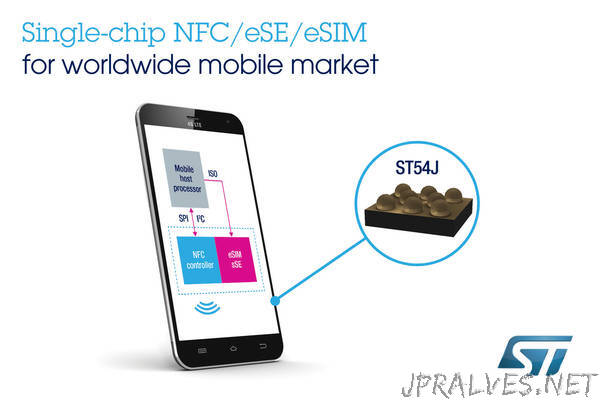
Ever wished you could ditch the physical SIM card and the hassle of finding a local store every time you land abroad? An eSIM for travel is a digital SIM that lets you instantly activate a mobile data plan on your compatible phone, often within minutes of booking. You simply scan a QR code or download a profile, and you’re connected to local networks, keeping your original number active for calls and texts.
Why Global Nomads Are Ditching Plastic SIMs
For a nomad hopping from Marrakech to Medellín, fumbling for a paperclip to swap nano-SIMs at 2 AM lost every transaction edge. Global nomads are ditching plastic SIMs because eSIMs let them buy a local data plan from a hammam bench, not a kiosk counter. That plastic chip means carrying a tray of tiny cards for every border—and losing one kills connectivity mid-journey.
An eSIM is simply the difference between activating a 10GB plan while your flight taxis and surviving on airport Wi-Fi while hunting for a physical store.
Forget the wait: you top up from your bunk on a sleeper train, not while sweating at an overpriced tourist shop. It’s the freedom to land anywhere with a tap, not a frantic scavenger hunt.
The real cost of buying local SIMs in every country
The real cost of buying local SIMs in every country extends far beyond the sticker price. Each purchase demands time spent hunting for a store, navigating language barriers for ID registration, and learning a new carrier’s activation process. This adds up to hours of lost vacation per trip. The financial cost multiplies if you must buy multiple SIMs for a short stay, paying activation fees you never recoup. The hidden expense of constant local SIM management becomes clear when you factor in frequent top-ups for minimal data. A single eSIM, by contrast, eliminates this compounding hassle entirely.
- Time wasted locating stores and completing registration paperwork in each foreign language.
- Unused credit left behind on abandoned SIMs that cannot be refilled later.
- Overpaying for short-term tourist bundles that cost more per gigabyte than a global eSIM plan.
How Embedded SIM Technology Shrinks Your Packing List
Embedded SIM technology directly reduces your travel packing list by eliminating the need to purchase, carry, or store physical SIM cards from different carriers. Instead of hunting for local SIM kiosks or managing a collection of tiny plastic cards, you activate a travel data plan entirely through software. Your phone becomes the only device you need for connectivity, as the eSIM is pre-soldered into the device. This removes the requirement for a SIM ejector tool, the physical SIM tray, and the risk of losing or damaging the card during transit.
By removing the physical card and its accessories, eSIM technology essentially transfers an entire category of travel logistics from your luggage to your phone’s settings menu.
The result is one less errand to run and one more pocket left free for essentials.
No more fumbling with tiny trays at airport kiosks
The frantic scramble to eject your physical SIM tray, often dropping that minuscule chip on the terminal floor, vanishes with eSIM for travel. Instead of fumbling at a crowded kiosk, you simply scan a QR code or tap a profile into your phone’s settings. The process follows a clean, stress-free sequence:
- Purchase a data plan online before your flight.
- Scan the activation QR code from your confirmation email.
- Select the new eSIM line for data in your phone’s cellular settings.
That’s it—no tiny tools, no paperclips, no frantic searches for a lost tray under the airport seat.
Comparing Prepaid Data Plans: Speed Versus Savings
You land in Tokyo, exhausted, and tap an eSIM purchase: a $20 30-day plan with 5GB at full speed. That’s savings, but on day three, streaming directions chews through it, and you face throttling to 128kbps. Now you wonder: *Should I have paid $40 for the 10GB “fast data” plan, or will buying top-ups save more?* The slower option works for emails but fails for real-time maps. A Swiss travel app founder once griped that his “cheap” eSIM made voice calls impossible during a layover—proving speed matters when you’re stranded. So, ask yourself: do you need crisp video calls in a café, or just WhatsApp texts? That choice defines your trade-off between blistering downloads and budget peace.

Regional passes vs. global bucket plans for road warriors
For road warriors, choosing between regional passes and global bucket plans hinges on their specific itinerary. A regional pass, covering a continent like Europe or Asia, offers far better value if trips are confined to that zone, avoiding paying for unused global coverage. Conversely, a global bucket plan with a single data pool provides essential flexibility for those who hop between continents or have unpredictable schedules. The key consideration is whether your trip pattern clusters in one region or scatters across the globe. Always verify that a regional pass includes all your specific destination countries to avoid blind spots.
- Regional passes offer lower cost per GB when staying within one continent.
- Global bucket plans provide a unified data allowance, eliminating the need to manage separate regional top-ups.
- A global plan is more practical for multi-continent trips, preventing service gaps between regional zones.
- Regional passes often have stricter validity windows, requiring precise trip planning to maximize value.
Installing Your First Digital Profile in Under 90 Seconds
For installing your first digital profile in under 90 seconds, the process is deliberately streamlined for travel. Upon purchasing an eSIM plan, you receive a QR code or manual activation code. Open your device’s settings, tap “Add Cellular Plan,” then scan the code. Your phone instantly downloads the profile, requiring no physical card swap. Within seconds, the new line appears—typically labeled with your destination or provider. Ensure you’re on Wi-Fi during this step; without it, the download can stall. Once activated, you must designate this profile for data only under cellular settings to avoid roaming charges on your primary line.
The critical insight: rename the profile immediately to “France Trip” or similar—this prevents accidental toggling when you’re offline and need to troubleshoot a patchy connection.
After the 90-second setup, you’re live and connected, ready to navigate local networks without hunting for SIM eject tools.
QR code activation and what to do if it fails
To activate, simply scan the QR code from your travel eSIM confirmation email using your phone’s camera or settings menu. If the scan fails, ensure you have a stable Wi-Fi connection, as the profile downloads live data. A sudden “invalid code” error typically means the QR expired—revisit your account to request a new one. For persistent failures, manually enter the SM-DP+ address and activation code printed below the QR. Remember, immediate QR troubleshooting often solves the issue by toggling Airplane Mode for 10 seconds before retrying the scan.
Navigating Coverage Gaps: Which Destinations Still Struggle
When navigating coverage gaps with an eSIM for travel, certain destinations still struggle with consistent connectivity. Crucial coverage gaps frequently emerge in remote regions like rural Mongolia, the Amazon basin, or the Scottish Highlands, where local infrastructure is sparse. Island nations such as Cuba, Myanmar, or North Korea also pose challenges due to limited roaming agreements or state-controlled networks. Even popular spots like parts of Morocco’s Sahara or Nepal’s trekking routes may have unreliable data speeds. To avoid disruption, travellers should research destination-specific compatibility before purchase, often needing a backup local physical SIM or offline maps for these areas.
Trouble spots in rural Asia and remote island chains
Even in the digital age, venturing into rural Asia’s mountainous hinterlands or hopping between remote island chains often means falling off the grid entirely. These zones are classic dead zones for eSIM connectivity, where even major providers fail to secure roaming agreements with obscure local towers. Travelers hiking in northern Laos or sailing the Philippines’ most distant atolls frequently discover their eSIM shows “No Service” for hours, a stark contrast to coastal city hotspots. To navigate this, rely on offline maps downloaded before departure.
Q: How can I get signal in rural Asia’s dead zones?
A: Pre-download offline maps and consider buying a local physical SIM on arrival—these frequently have better access to rural infrastructure than global eSIM plans.
Dual SIM Strategy: Keeping Your Home Number Active
Before my last trip, I switched my physical home SIM to a secondary slot and added a travel eSIM as my primary data line. This dual SIM strategy kept my home number active for banking codes and family calls without roaming fees. On the road, I used the travel eSIM’s data for maps and WhatsApp, while my home number stayed live for urgent texts. The real trick? A simple Q&A made it click for me: Q: How do you receive SMS on your home number without a roaming plan? A: Your phone checks the home SIM’s signal automatically, so texts arrive over the cellular network even without data, as long as China eSIM you don’t turn off the SIM. That meant no missed two-factor codes, just smooth, affordable connectivity abroad.
Using one phone for local data and personal calls simultaneously
Using one device for local data and personal calls simultaneously is achieved by configuring the local eSIM for data and the home SIM for voice. This enables dual SIM seamless connectivity during travel. The phone routes all internet traffic through the local eSIM, avoiding roaming fees. Meanwhile, calls and texts to your home number still arrive via the original SIM, which remains active for voice. You can also make outbound calls on your home number while browsing on the local eSIM, provided cellular data switching is enabled.
Q: Can I talk on my home number while using the local data eSIM for streaming?
A: Yes. As long as the home SIM is set for voice and the local eSIM for data, voice calls do not interrupt data flow; the phone handles both channels concurrently.
Battery Life and Network Switching During Long Layovers
During a long layover, your eSIM’s network switching can drain battery faster as your phone constantly scans for local towers in an unfamiliar zone. To preserve power, manually lock your eSIM to a stable network instead of relying on automatic selection. Q: How do I stop battery drain when switching networks on a layover? A: Turn off automatic network selection in your eSIM settings, choose a strong local carrier manually, and enable Airplane Mode when resting to prevent constant re-scanning. This keeps your phone alive for the next leg without unnecessary power loss.
Auto-roaming pitfalls and manually selecting carriers abroad
Auto-roaming often locks your phone onto a partner network that is congested or has weak signal in transit hubs, silently draining your battery. Instead, manually select carriers abroad by scanning available networks in your phone’s settings after landing. Manual carrier selection for eSIM travelers lets you choose a local provider with stronger coverage, preserving your battery for the entire layover. This simple switch can reduce standby battery drain by up to 30% during multi-hour waits.
- Auto-roaming may connect you to a 3G network when a stronger 4G/5G option exists nearby.
- Manually selecting a carrier prevents constant reconnection attempts that sap battery life.
- Scanning networks lets you avoid expensive data rates from unintentional auto-roaming onto non-eSIM partners.
Common Pitfalls That Drain Your Data Allowance

Wandering through Rome, I thought my eSIM for travel was safe, but background app refresh secretly gorged on my data allowance while I slept. Automatic photo backups to the cloud are a relentless silent drain, syncing every snap without asking. I also learned that leaving Wi-Fi Assist active on my phone forces it to use mobile data when the hotel Wi-Fi gets weak, burning through my plan during a boring Netflix buffer. Another day, video calls on WhatsApp defaulted to HD, chewing up megabytes for a grainy connection—I had to dive into settings and force them to “low data mode.” The biggest shock was mapping apps: downloading offline maps before leaving saved my allowance, but forgetting that meant Google Maps streamed fresh tiles for every turn.
Background app refresh and accidental video streaming
Background app refresh silently consumes travel eSIM data by updating apps like maps or social feeds in the background, often triggering automatic video previews. On cellular data, these refreshed feeds load high-resolution clips without your tap, rapidly depleting your allowance. Disable background app refresh for non-essential apps in your settings before roaming, and restrict video autoplay to Wi-Fi only within each app’s data preferences. This prevents accidental streaming from news or social apps that reload video content every time your signal changes or the app awakens in the background.
Background app refresh and accidental video streaming burn travel eSIM data through automatic video autoplay and unseen background updates; disable both per-app before roaming to avoid unexpected depletion.
Security Benefits of Temporary Connections
Temporary eSIM connections keep your main number private, slashing the risk of SIM-swap attacks while abroad. Since the profile auto-deactivates after your trip, no lingering data or hacker access remains on local networks. Q: How does a temporary eSIM prevent data leaks? A: It isolates travel activity to a disposable line, so your home carrier details stay hidden. You simply delete the eSIM when done, removing any chance of future exploits tied to that foreign connection.
Avoiding public Wi-Fi phishing traps on the go
When traveling, you can sidestep public Wi-Fi phishing traps on the go by relying on your eSIM’s cellular data instead of airport or café hotspots. Hackers often clone login pages to steal credentials, but a direct eSIM connection bypasses that risk entirely. Before connecting to any network, verify it’s the official SSID, not a “Free_Airport_WiFi” lookalike. Even a split-second glance at the network name can foil a credential-harvesting trap. Use a VPN over your eSIM for an extra layer of encryption, and never autoconnect to unknown networks—manually choose only trusted, password-protected ones.

- Disable Wi-Fi auto-join to avoid rogue network connections.
- Confirm the official hotspot name with staff before connecting.
- Keep your device’s firewall active and forget networks after use.
Best Practices for Multi-Country Backpacking Trips
For multi-country backpacking trips, the best practice is to purchase a regional eSIM plan covering all your planned destinations before departure, avoiding the hassle of swapping physical SIMs at each border. Ensure your phone is unlocked and install the eSIM profile on stable Wi-Fi prior to travel. Prioritize plans with flexible data top-ups to adjust usage between countries with varying network coverage. A key question: Should I buy one regional eSIM or separate local ones? Typically, a single regional eSIM is more practical for backpackers crossing borders frequently, as it provides seamless connectivity and eliminates the need to manage multiple profiles or payment methods across different countries. Always download offline maps and critical apps before departure to conserve data in areas with weak signals.
Switching providers mid-trip without losing your number
Switching providers mid-trip without losing your number is straightforward with an eSIM. You simply install a new eSIM profile for the desired provider while keeping your primary eSIM active. To avoid losing service, ensure your device supports dual eSIMs or a physical SIM plus an eSIM. Disable the primary line for data before activating the new one. Your number remains tied to your original eSIM profile, which you can leave enabled for calls and texts. The primary challenge is managing your device’s cellular settings to assign data to the new provider while maintaining your number on the original line. This flexibility is a key advantage of multi-eSIM travel.
Can I switch eSIM providers mid-trip without losing my phone number? Yes, as long as you keep your original eSIM profile active for voice and SMS, and only reassign data usage to a new provider’s eSIM. Your number is permanently linked to that profile, not the data provider.
Future Trends: Airline Partnerships and Unlimited Regional Plans
Airline partnerships with eSIM providers are evolving to bundle unlimited regional data plans directly into ticket purchases, allowing travelers to activate connectivity via their carrier’s app upon landing. These plans often cover contiguous zones (e.g., all of Europe or Southeast Asia) and automatically switch between local networks to maintain speed. A key insight:
Unlimited regional plans eliminate per-country roaming fees by treating an entire continent as a single data zone, simplifying travel across multiple borders.
As airlines embed eSIM profiles into loyalty ecosystems, passengers can seamlessly top up or extend data through their boarding pass interface, removing the need for separate SIM purchases or local carrier research.
What the next generation of travel connectivity looks like
The next generation of travel connectivity features seamless, eSIM-native roaming that automatically activates upon landing, eliminating physical SIM swaps. Users will experience unlimited regional travel profiles that dynamically switch between partner airlines’ networks based on signal strength and data demand. This involves a clear sequence:
- a traveler purchases a single regional eSIM plan bundled with their flight ticket.
- Upon arrival, the eSIM prioritizes the airline’s partner network for consistent speed.
- If congestion occurs, the profile fails over to a secondary local provider within the same region without user intervention.
The result is always-on data across multiple countries with no manual reconfiguration, directly from the device’s settings menu.
What Exactly Is a Travel eSIM and How Does It Work
The Simple Breakdown of Embedded SIM Technology for Travelers
How Your Phone Connects to a Local Network Without a Physical Card
Top Reasons to Switch to a Digital SIM for Your Next Trip